

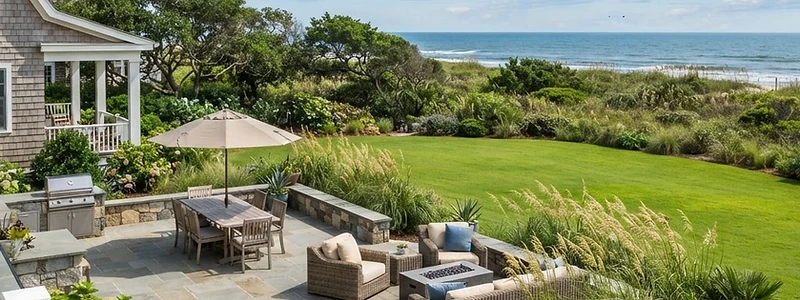
Designing Coastal Hardscapes That Withstand Salt Air and Erosion
Living with the Coast: Hardscaping for Wilmington and Topsail Island
Living in coastal North Carolina—from the bustling streets of Wilmington to the quiet shores of Topsail Island—is a dream. However, the same salt-kissed air and sandy soil that make our region beautiful present unique challenges for homeowners looking to install hardscapes. Whether you are adding a new paver patio or a retaining wall to combat slope erosion, your design must be as resilient as it is beautiful.
The Challenge of Salt Air and Sandy Soil
Salt air is highly corrosive. Over time, it can degrade certain materials, turning what should be a low-maintenance patio into a source of constant upkeep. Additionally, our sandy soil, while great for drainage, is prone to shifting. Without proper site preparation, heavy hardscape installations can sink or become uneven, leading to cracks and structural failure.
At Futrell Landscapes, we focus on material selection that resists the "coastal bite." We recommend high-density concrete pavers and natural stone that are sealed with high-quality, breathable sealants. These products offer a barrier against salt penetration and help maintain their aesthetic integrity through the harsh Atlantic exposure.
Combatting Erosion and Managing Runoff
In areas like Hampstead and coastal Wilmington, water management is everything. During hurricane season or heavy summer thunderstorms, runoff can quickly wash away your topsoil and damage your foundation. If you have a sloped yard, integrated retaining walls are essential. We utilize segmental retaining wall systems that are designed to handle the pressure of saturated sandy soil while preventing the collapse that leads to property damage.
Beyond walls, permeable pavers are a game-changer. These systems allow water to infiltrate the ground, reducing surface runoff and keeping your lawn—whether you are working with lush Bermuda, Zoysia, or Centipede turf—from becoming a swampy mess. This natural filtration is better for the environment and better for your property’s longevity.
Protecting Your Turf and Transitions
When designing hardscapes, you must consider the transition between stone and sod. Because our coastal grasses like Zoysia and Bermuda have different sunlight and water requirements, improper installation can lead to dead zones at the edges of your patio. We design hardscapes with clean, root-proof edging, which keeps your turf from encroaching on your living space while ensuring the roots remain healthy and aerated.
Longevity Starts with Proper Foundation
In North Carolina’s coastal environment, you cannot skimp on the sub-base. A standard installation won't hold up in our shifting sands. We utilize compacted crushed aggregate bases that are specifically engineered to provide structural stability, preventing the "waves" that often appear in poorly installed backyard projects after a season of heavy rain.
FAQ
How often should I seal my coastal paver patio?
Due to the salt spray and intense sun exposure in our region, we recommend having your hardscapes professionally cleaned and sealed every 2 to 3 years. This protects against staining and keeps the salt from breaking down the surface of the stones.
Can you install hardscapes during hurricane season?
Yes, but it requires careful planning. We monitor the weather closely and ensure that any exposed soil is stabilized immediately to prevent runoff. If a storm is forecasted, we halt operations to ensure safety and prevent material damage.
What is the best material for a coastal patio?
High-density concrete pavers or natural stones like bluestone or travertine are excellent choices. They are durable, easy to repair if a single piece shifts, and hold up exceptionally well to the high humidity of coastal North Carolina.
Do hardscapes help with sandy soil erosion?
Yes, but they must be designed as part of a larger plan. Combining retaining walls with deep-rooted native plants and permeable hardscapes is the most effective way to lock your soil in place and prevent erosion during heavy storm events.