
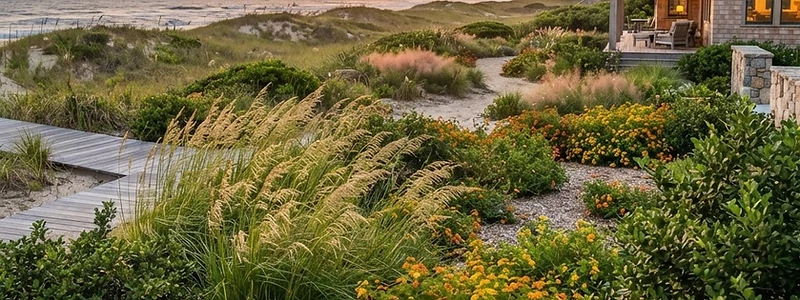
Selecting Salt-Tolerant Plants for Your Topsail Island Landscape Design
Living with the Coast: Mastering Topsail Island Landscaping
Creating a lush, vibrant landscape on Topsail Island is a dream for many coastal homeowners, but the unique environmental factors—briny salt spray, sandy, nutrient-poor soil, and the occasional fury of hurricane season—demand a strategic approach. At Futrell Landscapes, we have spent years perfecting the art of coastal design, ensuring that our clients' gardens are not only beautiful but resilient enough to withstand the elements.
Understanding the Coastal Environment
Coastal North Carolina offers a beautiful climate, but it is a challenging landscape. The salt-laden air acts as a drying agent for many traditional ornamental plants, and the sandy soil of Hampstead and the barrier islands drains water quickly, often carrying vital nutrients away from plant roots. To build a successful landscape, you must work with the environment rather than against it.
The Challenge of Salt Tolerance
Salt spray is the primary enemy of many garden favorites. Plants that are not salt-tolerant will often show signs of 'leaf burn,' where the edges of the foliage turn brown and crispy. On the coast, we prioritize species with waxy or fuzzy leaves, which help deflect salt deposits and retain moisture.
Soil Management and Hydration
In our region, amending the sandy soil with high-quality organic compost is essential. It provides the structure necessary to hold moisture and helps anchor the root systems of your plants. Our team often recommends a soil test before beginning any major planting project to determine exactly what your garden needs to thrive.
The Best Salt-Tolerant Plants for Our Coast
When choosing plants for your Topsail or Wilmington property, look for those that have evolved in dune environments. Here are some of our top performers:
- Yaupon Holly: A staple of our local landscape, the Yaupon is incredibly tough, salt-tolerant, and provides beautiful red berries that support local wildlife.
- Sea Oats: Essential for stabilization, Sea Oats are beautiful ornamental grasses that thrive in sand and provide vital protection against erosion.
- Shore Juniper: This low-growing evergreen is excellent for ground cover in sandy areas where grass may struggle to take hold.
- Lantana: A colorful, heat-loving addition that blooms throughout the summer, perfect for adding pops of color to sun-drenched gardens.
Turf Management in Coastal North Carolina
Selecting the right turf for your coastal lawn is just as important as your flower beds. For properties in Wilmington and Hampstead, we typically recommend warm-season grasses that handle the heat and humidity well.
- Zoysia: Known for its dense, carpet-like texture and superior tolerance to foot traffic, Zoysia is a premium choice for coastal homes.
- Centipede: Ideal for homeowners who prefer lower maintenance, centipede grass thrives in our acidic sandy soils with less fertilizer than other varieties.
- Bermuda: While it requires more maintenance and frequent mowing, Bermuda grass is unmatched in its ability to recover from heat stress and high traffic.
Hurricane-Resistant Landscaping Design
Preparing for hurricane season is a way of life here in North Carolina. When we design landscapes for our clients, we focus on structural integrity. We avoid planting large, shallow-rooted trees too close to the home and prefer using wind-resistant shrubbery like Wax Myrtles and Hollies that can survive high-wind events without being uprooted.
FAQ
How often should I water my coastal landscape?
Because sandy soil drains rapidly, you should water deeply and less frequently. This encourages roots to grow deeper, making the plants more resilient to drought and high winds. We recommend a smart irrigation system that adjusts to local weather patterns.
Can I have a traditional lawn on the beach?
Yes, but it requires diligent maintenance. Salt spray can impact turf health, so choosing the right grass type (like Zoysia) and implementing a proper fertilization and aeration schedule is key to keeping it green.
What is the best way to handle nutrient loss in sand?
We recommend top-dressing with organic matter or compost twice a year. This improves soil moisture retention and provides a slow-release source of nutrients that plants can access over time.